High-Traffic Location Types
⏱ 7 min read
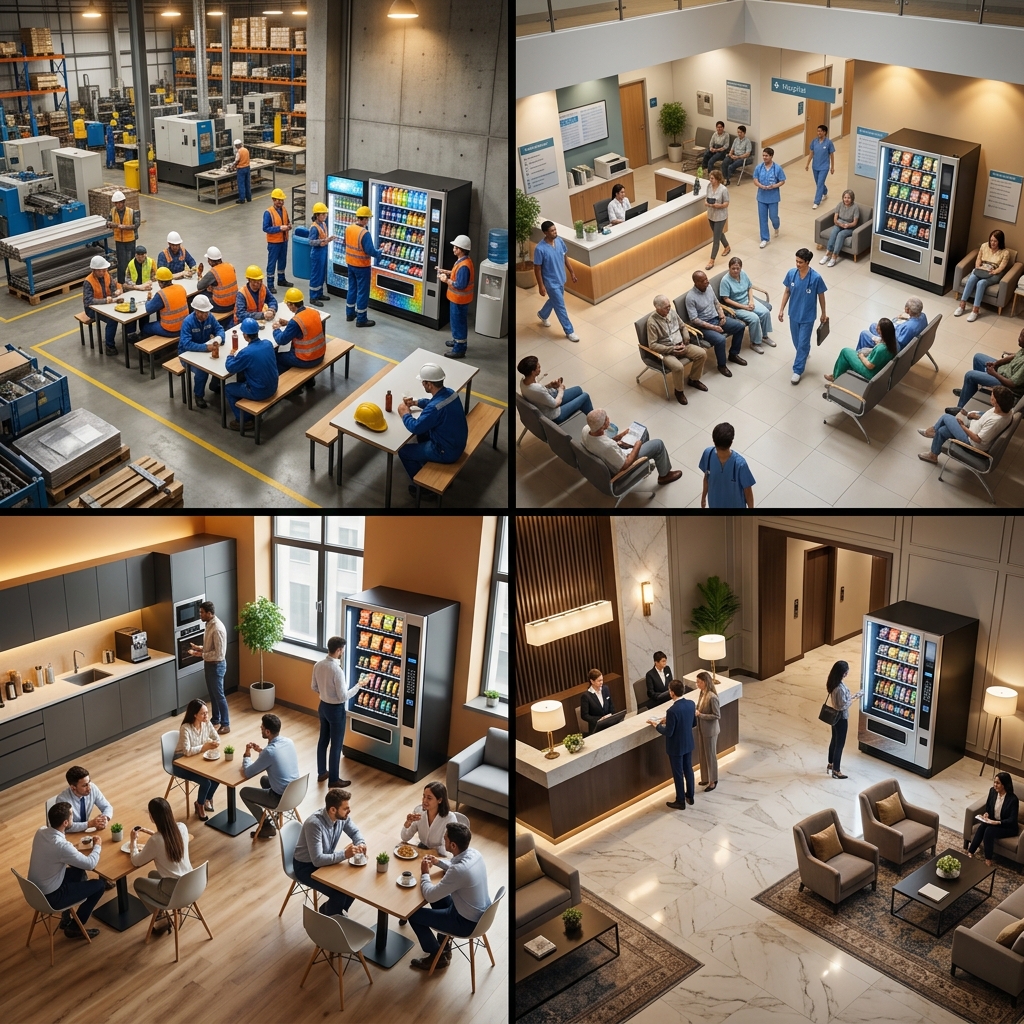
Top-tier vending locations: manufacturing plants, hospitals, corporate offices, and hotel lobbies, where captive audiences drive consistent revenue.
High-Traffic Location Types: Scouting the Best Placements
In the vending business, location is everything. A top-tier machine equipped with premium cashless tech and the perfect product mix will fail if it is placed in a low-traffic office with 15 employees. Conversely, a simple, clean, refurbished machine in a busy warehouse can generate $1,000 a month in net revenue. This lesson details the core philosophy of location scouting, categorizes locations into performance tiers, discusses emerging opportunities, and establishes strict employee headcount viability thresholds.
1. The Core Philosophy of Location Scouting
Many beginners make the mistake of equating raw foot traffic with vending sales. They think, "I'll place a machine in a busy shopping mall lobby because thousands of people walk by every day." In reality, shopping malls are often terrible vending locations. Why? Because shoppers are walking, they have access to food courts, they are carrying bags, and they are not "captive."
The most profitable vending locations share three core characteristics:
- Captivity: The people at the location are stuck there for long periods (typically 8-10 hour shifts) and cannot easily leave to buy food or drinks.
- Limited Alternatives: There are no convenience stores, fast food joints, or micro-markets within a 5-minute walk.
- Physical Exertion or Stress: The people are performing manual labor (burning calories and getting thirsty) or working high-stress desk jobs (driving high energy drink and snack consumption).
This is why blue-collar environments (manufacturing, warehousing, auto shops) consistently outperform white-collar environments (law offices, real estate agencies) by a factor of 3x to 5x. Blue-collar workers work hard, get short break times (15 minutes), and prefer physical sodas and snacks. White-collar workers have longer lunch breaks, are more health-conscious, and often have access to free office snacks.
2. Shift Schedules: The Secret Multiplier
When auditing an industrial location, do not look only at total employee count. You must ask about shift schedules.
- Single Shift (8 AM - 5 PM): A warehouse with 100 employees working a single 8-hour shift is a good location.
- Three Shifts (24/7 Operation): A manufacturing plant with 100 employees split across three shifts running 24/7 (33 workers per shift) is an exceptional location. Why? Because night-shift workers have zero alternative food options nearby (everything is closed at 2 AM), their fatigue drives high caffeine purchases, and the machines are utilized 24 hours a day.
- Rule of thumb: A 24/7 industrial facility generates 2x to 3x the vending revenue of a single-shift facility with the exact same total headcount.
3. Public Schools and Universities: Bidding and RFPs
Schools and universities are high-volume, premium locations, but they operate under strict administrative rules:
- The RFP Process (Request for Proposal): School districts and public colleges do not let you place machines via a simple walk-in pitch. They release competitive RFPs. You must submit a formal written bid detailing your equipment age, product selection (meeting federal nutrition guidelines), commission split (typically high, between 15% and 25%), and references.
- Nutritional Standards: Many high schools participate in the USDA Smart Snacks in School program. This limits calories per snack (under 200 calories) and beverage sizes, requiring you to stock baked chips, water, fruit cups, and diet drinks.
- Summer Operations: Revenue drops to zero during June, July, and August. You must ensure you have the cash reserves to cover card reader fees during this time, or negotiate agreements where readers can be paused or deactivated during summer recess.
4. Vandalism Protection and Safety
If your machine is in a public-facing location (gated parking lot, recreation center, outdoor EV charger), you must protect your equipment:
- Lockbars: Steel bars that run down the length of the machine door, secured with a heavy hockey-puck lock. This prevents crowbars from prying open the door.
- Polycarbonate Shields: Heavy transparent plastic panels bolted over the glass face to prevent rocks or hammers from shattering the glass and exposing the snacks.
- Security Cameras: Place machines under active CCTV dome cameras. A prominent sign saying "This machine is monitored 24/7 by remote video security" reduces vandalism rates by 80%.
5. The Vending Location Tier List
To guide your scouting, classify prospective locations into these four distinct tiers:
Tier S: Exceptional Placements (Est. Revenue: $1,200 - $3,000+/mo)
These are high-traffic, blue-collar or captive environments where workers are active and have limited access to external retail food options.
- Manufacturing & Industrial Plants (150+ workers): The absolute gold standard of vending. Workers perform physical labor, burn calories, and need quick snacks and cold drinks during short 15-minute breaks. These locations typically require a multi-machine bank (separate snack and beverage units) and service visits 2-3 times per week.
- Large Distribution Centers (Amazon, FedEx, DHL, UPS): 24/7 operations with high employee counts, high turnover, and short break times. Telemetry is essential here to keep up with rapid stock depletion.
- Hospitals & 24-Hour Care Facilities: High night-shift employee counts, stressed visitors, and closed cafeteria kitchens overnight drive consistent vending traffic.
Tier A: Highly Profitable Placements (Est. Revenue: $600 - $1,200/mo)
- Large Call Centers (100+ seats): High-stress environments where employees sit at desks and consume beverages and snacks consistently throughout the shift.
- Auto Dealerships with Large Service Bays: A mix of service mechanics (blue-collar buyers) and retail customers waiting in lounges for hours.
- Recreational Sports Complexes & Gyms: High physical activity drives beverage sales (water, energy drinks, protein shakes).
Tier B: Moderate Placements (Est. Revenue: $300 - $600/mo)
- Corporate Offices (40-80 employees): Stable white-collar placements. They prefer healthy snacks, premium coffees, and sparkling waters.
- Luxury Apartment Buildings (150+ units): High traffic in lobbies, especially for late-night impulse snack purchases.
- Laundromats: Customers are captive for 1 to 2 hours with nothing to do but drop coins in your machine.
Tier C: Marginal/Unviable Placements (Est. Revenue: Under $200/mo)
- Small Retail Shops (Under 20 staff): Low foot traffic and employees can easily leave to purchase food nearby.
- Office Breakrooms with Under 30 Staff: Avoid these unless they pay a monthly service subsidy. The volume is simply too low to justify the telemetry and connection overhead.
6. Emerging Location Opportunities in 2026
Modern operators are finding high margins in non-traditional locations:
- EV Charging Stations: Drivers are parked for 20 to 45 minutes with limited activities. Placing an outdoor-rated, secure combo machine adjacent to a charger bay generates high impulse drink sales. You must use protective security enclosures (steel cages) to protect against weather and vandalism.
- Self-Storage Facilities: Customers are lifting heavy boxes, getting hot and thirsty, and are far from convenience stores.
- Shared Coworking Spaces: High density of independent workers and freelancers who consume energy drinks and premium snacks.
7. Employee Headcount Thresholds
Before pitching a location, use these minimum thresholds to determine viability:
| Location Category | Minimum Headcount | Recommended Machine Setup |
|---|---|---|
| Blue-Collar / Industrial | 50+ Employees | High-Capacity Drink + Separate Snack Machine |
| White-Collar / Corporate | 60+ Employees | Single Combo Machine (Snack/Drink) |
| Public Venue / Retail Lobby | 80+ Daily Visitors | Single Combo Machine with Cashless |
| School / University | 150+ Students | Multi-Machine Bank (Snack, Soda, Coffee) |
8. Urban vs. Suburban vs. Rural Scouting Dynamics
- Urban Centers: High pedestrian foot traffic, but high competition and high delivery difficulty (parking, stairs, elevators). Focus on high-rise residential buildings and private corporate centers.
- Suburban Areas: Dominated by corporate offices, car dealerships, and gyms. Easy logistics, but lower walk-in foot traffic. Focus on employee count verification.
- Rural Locations: Industrial parks, manufacturing hubs, and community colleges. Lower competition, highly loyal customers, but longer driving times. Optimize route scheduling to service these locations bi-weekly rather than weekly.
9. Location Scouting Checklist
Use this checklist when scoping out potential placements:
- Count employee parking spaces during mid-day shifts to verify headcount.
- Observe if employees leave the premises during lunch or break times.
- Map the nearest convenience store or fast food restaurant (must be at least 0.5 miles away).
- Check if the business has a microwave or refrigerator on site (competing with vending).
- Look for existing vending machines and note their brand, age, and inventory condition.