Evaluating a Location
⏱ 7 min read
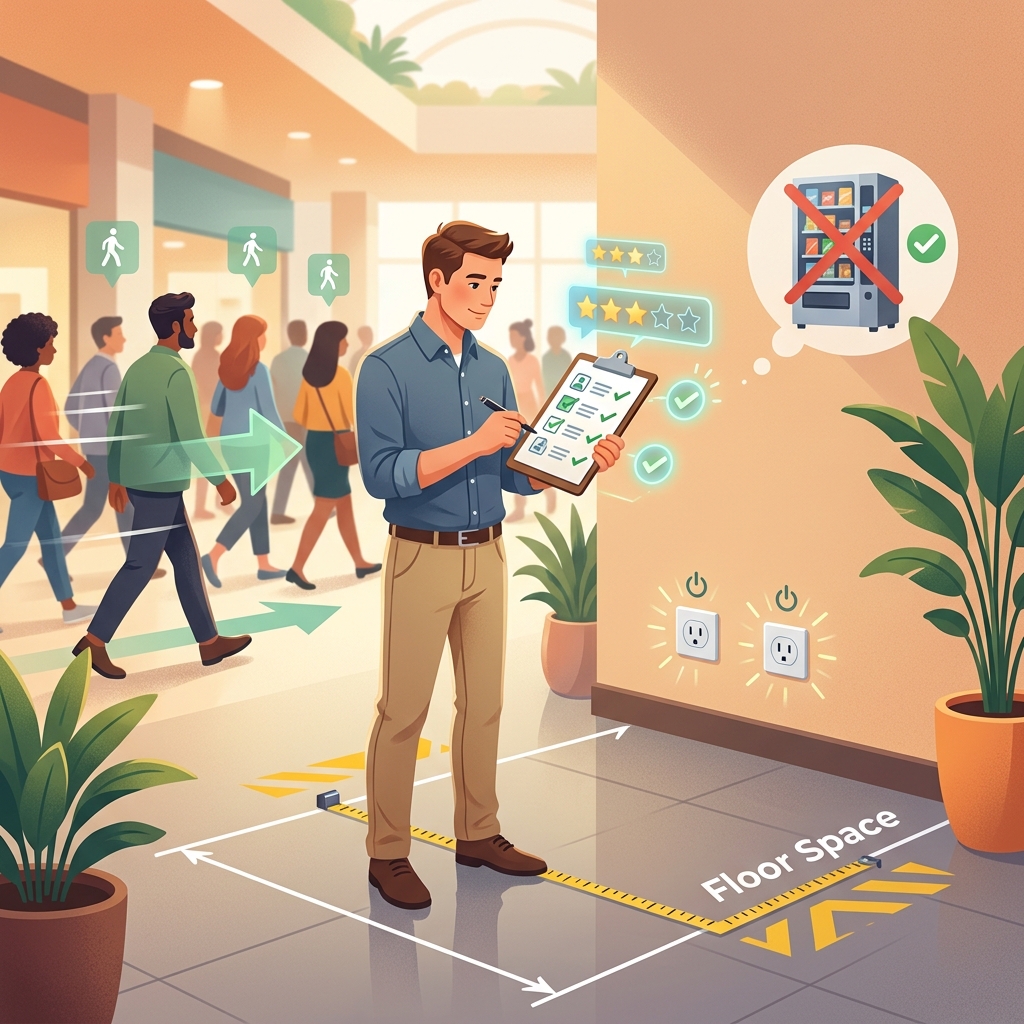
The 5-Point Location Scorecard: evaluating foot traffic, competition, access, power, and decision-maker availability.
Evaluating a Location: The 5-Point Scorecard
Scouting is only half the battle. Once you identify a potential location, you must analyze its financial viability before signing a contract. If you place a machine based on gut feeling, you will end up with equipment stuck in low-yielding locations. This lesson provides an objective location scorecard, walks through a comparative evaluation scenario, and outlines the critical site-visit inspection protocol.
1. The 5-Point Location Scorecard
Assess every prospective location using these five categories, scoring each from 1 (poor) to 10 (exceptional).
| Category | Description | Weight | Maximum Score |
|---|---|---|---|
| Foot Traffic & Density | Number of daily workers or visitors passing the machine area. | 2.0 | 20 |
| Alternative Food Options | Distance to the nearest convenience store, cafeteria, or fast food joint. | 1.5 | 15 |
| Blue-Collar Demographics | Ratio of physical laborers to office staff (physical labor drives sales). | 1.0 | 10 |
| Competitor Presence | Existing vending machines, micro-markets, or free office pantries. | 1.5 | 15 |
| Decision-Maker Accessibility | How easily you can reach the property owner and secure a contract. | 1.0 | 10 |
| TOTAL | 70 |
- Scoring Scale:
- 50 - 70 Points: Tier S/A Placements. Sign the contract immediately.
- 35 - 49 Points: Tier B Placements. Viable for a refurbished combo machine.
- Under 35 Points: Pass. Do not invest your capital or time.
2. Comparative Scorecard Walkthrough: Gym vs. Car Dealership vs. Small Office
To see the scorecard in action, let's analyze three real-world scouting scenarios:
Scenario A: High-End Gym (500+ members, suburban location)
- Foot Traffic: 8 (High member turnover, but brief visits) - Weighted Score: 16/20
- Alternatives: 6 (Convenience store 2 blocks away) - Weighted Score: 9/15
- Demographics: 4 (Health-conscious members, low blue-collar ratio) - Weighted Score: 4/10
- Competition: 8 (No other machines on site) - Weighted Score: 12/15
- Accessibility: 7 (General manager is on-site daily) - Weighted Score: 7/10
- Total Score: 48/70 (Viable for a healthy-option combo machine).
Scenario B: Auto Body Service Center (25 mechanics, 50 daily waiting customers)
- Foot Traffic: 6 (Mechanics work 10-hour shifts, customers wait 2 hours) - Weighted Score: 12/20
- Alternatives: 9 (No retail food within 1 mile) - Weighted Score: 13.5/15
- Demographics: 10 (High physical labor, thirsty mechanics) - Weighted Score: 10/10
- Competition: 9 (Only an old broken soda dispenser on site) - Weighted Score: 13.5/15
- Accessibility: 6 (Owner is busy, but open to pitches) - Weighted Score: 6/10
- Total Score: 55/70 (Highly Viable Tier A location. Ideal for separate snack and beverage units).
Scenario C: Real Estate Office (15 realtors, suburban corporate office park)
- Foot Traffic: 2 (Realtors are out showing homes, rarely in office) - Weighted Score: 4/20
- Alternatives: 4 (Cafe in the lobby of the building) - Weighted Score: 6/15
- Demographics: 2 (White-collar, low calorie burn) - Weighted Score: 2/10
- Competition: 3 (Free office coffee and snacks provided by broker) - Weighted Score: 4.5/15
- Accessibility: 8 (Broker is a personal friend) - Weighted Score: 8/10
- Total Score: 24.5/70 (Unviable. Do not place a machine here).
3. The 20-Point Site-Audit Protocol
Before signing a contract, you must spend 30 minutes at the location conducting a physical audit. Bring a tape measure, a notepad, and your phone. Fill out these parameters:
Physical Footprint & Access
- Measure width of entry doorways (minimum 32" clearance required).
- Inspect corridors for tight turns or low arches.
- Check if building has elevator access or if stairs are required (stairs require special dollies).
- Locate the delivery loading zone and measure distance to breakroom.
Utilities & Environment
- Locate the targeted electrical outlet. Verify it is a grounded 115V AC outlet.
- Confirm the outlet is not shared with microwaves, space heaters, or copiers.
- Test the cellular signal strength (LTE/5G) at the outlet using your phone (needed for Nayax reader).
- Check if the proposed spot is exposed to direct sunlight (causes refrigeration overheating and chocolate melting).
Competitor Audit
- Count existing machines. Note brand (Nayax, Cantaloupe, cash only).
- Audit competitor stock levels. Are key slots empty?
- Check product expiration dates on active items.
- Test the bill validator or card reader on competitor machines to see if it errors.
4. Cellular Dead Zones and Puck Antennas
A major risk for modern cashless readers is weak cellular connectivity:
- The Risk: If the breakroom is in a basement or surrounded by thick concrete/metal walls, the Nayax reader's standard antenna will fail to connect, returning a "No Signal" error and preventing card swipes.
- The Solvers:
- High-Gain Puck Antennas: You can purchase a magnetic mount external high-gain antenna (approx. $25) with a 10-foot coax cable. Drill a small hole in the top of the machine cabinet, mount the puck antenna on the exterior top face, and run the cable inside to the reader.
- Signal Boosters: For extreme cases, you may need a small cellular signal booster installed in the building hallway.
- Wi-Fi Harnesses: Modern readers can be fitted with a Wi-Fi card allowing them to connect to the facility's local network (usually requiring guest network clearance from their IT department).
5. Competitor Vending Audit: Sourcing Your Pitch
If there is already a vending machine at your target location, do not immediately walk away. Instead, perform a "Competitor Audit." This is your primary sales lever to convince the manager to replace them.
- Empty Slots: If more than 20% of the competitor's selections are empty, take a picture. This proves the current operator is negligent.
- Outdated Payment Tech: If the machine is cash-only (no card reader), this is a massive pain point for employees.
- Dirt and Dust: A dirty cabinet or dusty delivery flap indicates poor food safety standards.
- Pricing: Note their prices. If they are charging $2.00 for standard cans of soda, you can offer better service or match it with premium cashless options.
- Your Pitch: "I noticed the current machines have been out of basic sodas and chips for two weeks. Because we use real-time cellular telemetry, our system alerts us before items sell out, ensuring your employees always have refreshments."
6. Seasonality and Its Impact on Revenue
Vending revenue is subject to seasonal fluctuations depending on the location type:
- Gyms and Fitness Centers: Revenue peaks in January and February (New Year's resolutions) and slumps during summer when members exercise outdoors.
- Schools and Universities: Revenue drops to zero during summer break and winter holidays. You must plan your cash reserves to cover monthly card reader fees during these dry spells.
- Offices and Industrial Plants: Revenue is stable year-round, with minor dips during major holidays (Thanksgiving, Christmas) when facilities shut down.
- Outdoor Locations: Beverage sales spike by 50% to 100% during summer heatwaves. Make sure your telemetry system is set up to alert you before drinks sell out.
Scorecard Score Sheet Template
Copy and print this template when visiting locations:
Location Name: ___________________________
Address: _________________________________
Scout Date: ____________

1. Foot Traffic (1-10): _____ x 2.0 = _____
2. Alternatives (1-10):  _____ x 1.5 = _____
3. Blue-Collar (1-10):    _____ x 1.0 = _____
4. Competitor (1-10):    _____ x 1.5 = _____
5. Access (1-10):        _____ x 1.0 = _____

FINAL TOTAL SCORE (Max 70): _________ (Threshold to pass: 35)