Machine Types Compared
⏱ 7 min read
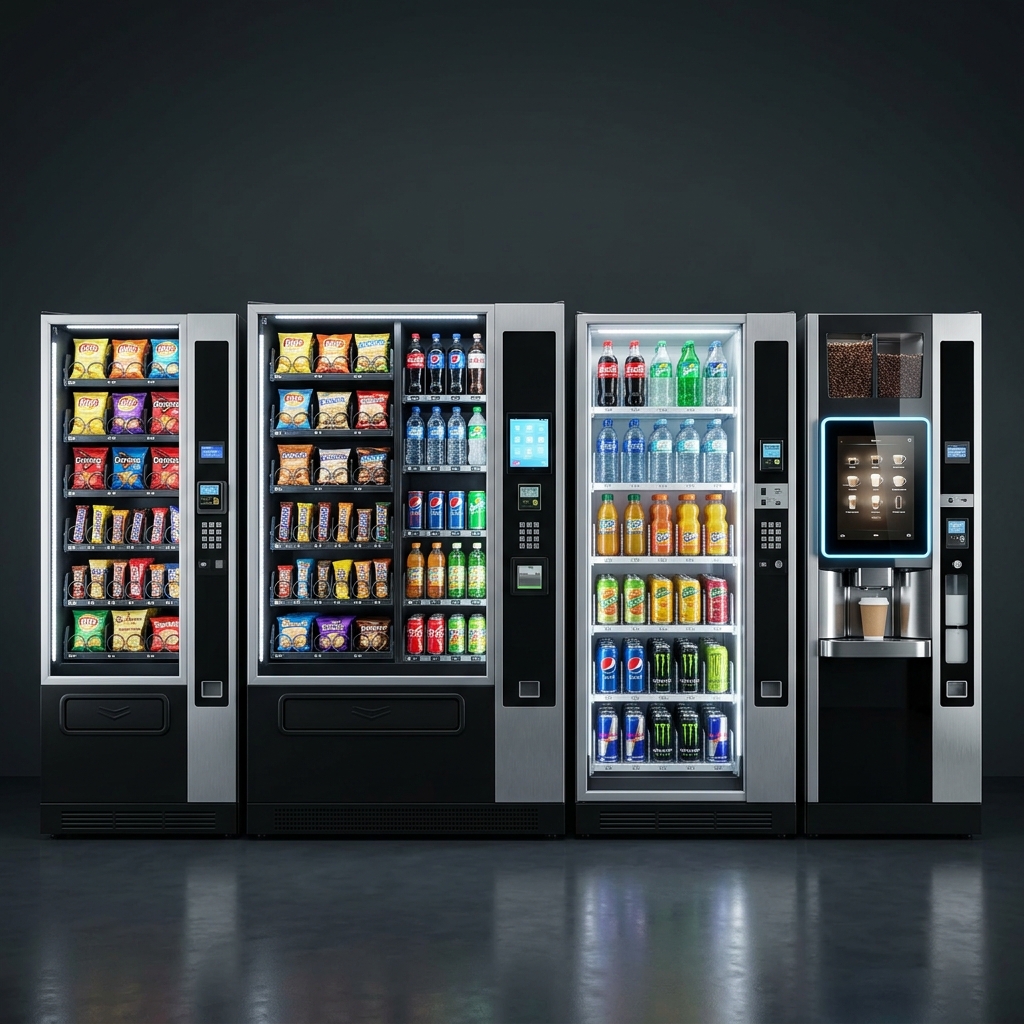
The four main machine types: snack-only, combo, beverage-only, and premium coffee, each suited for different locations and budgets.
Choosing Your First Machine: The Complete Equipment Guide
Purchasing the correct type of equipment is one of the most critical decisions you will make. If you deploy a machine that does not match the demographics or space layout of your location, you will suffer from slow inventory rotation, high product waste, and low daily sales. This lesson details the four primary machine types used in the industry, provides specific model recommendations with real market pricing, offers a machine selection flowchart, details frozen food and specialty machines, and establishes typical manufacturer lifespan expectations.
1. The Four Primary Vending Machine Types
To build a profitable route, you must understand the mechanical and operational differences between the four core machine classes:
Combo Machines (Recommended for Beginners)
Combo machines house snacks on the top shelves and cold drinks in a refrigerated cabinet below. This design allows you to offer both beverage and snack options through a single machine cabinet, saving breakroom floor space and reducing your upfront capital investment.
- Refurbished Price: $2,500 - $3,500
- New Price: $4,500 - $6,500
- Revenue Potential: $400 - $1,200/month
- Ideal Locations: Medium-sized offices (30-80 employees), auto service waiting rooms, school lobbies, and recreational centers.
- Top Models:
- AMS (Automated Merchandising Systems) 39-Combo: The industry gold standard. Bulletproof reliability, using standard commercial parts.
- Crane National 167/168: Excellent configuration flexibility and easy-to-use controller boards.
- Seaga Infinity Series: Modern design with energy-efficient glass fronts, though replacement parts can occasionally take longer to ship.
Beverage-Only Machines
Beverage-only machines can dispense cans, bottles, or energy drinks. They utilize heavy-duty refrigeration compressors and specialized delivery chutes to handle the weight and temperature demands of high-volume cold drink sales.
- Refurbished Price: $1,800 - $3,000
- New Price: $3,500 - $5,000
- Revenue Potential: $300 - $1,000/month
- Ideal Locations: Warehouses, manufacturing complexes, construction sites, gym locker rooms, and public plazas.
- Top Models:
- Royal Vendors 660 / 804: The absolute workhorse of the industry. Outstanding insulation and bulletproof vend motors.
- Dixie Narco 501E / 5800: Highly adjustable column widths that let you mix 12oz cans and 20oz bottles in the same machine.
- Vendo 721: Features high reliability, simple maintenance, and excellent drop-chute mechanics.
Snack-Only Machines
Snack-only machines do not contain refrigeration units (or they utilize ambient air cooling only). They feature 5 to 6 shelves with rotating wire coils (spirals) to drop chips, chocolates, cookies, gum, mints, and pastries.
- Refurbished Price: $1,500 - $2,500
- New Price: $3,000 - $4,500
- Revenue Potential: $200 - $600/month
- Ideal Locations: Placements directly adjacent to an existing beverage machine or next to a water fountain in large schools, warehouses, or public venues.
- Top Models:
- Crane National 147 / 148 (Grid) Series: Extremely reliable, standard parts availability, and intuitive control menus.
- Automatic Products (AP) 113 / 123: Older but mechanically indestructible. Highly popular among budget-conscious route operators.
Specialty & Coffee Machines
Bean-to-cup coffee machines grind whole espresso beans and mix fresh coffee, hot chocolate, and tea drinks on demand.
- Refurbished Price: $3,000 - $6,000
- New Price: $7,000 - $12,000
- Revenue Potential: $500 - $2,500+/month
- Ideal Locations: High-end corporate headquarters, tech offices, hospital waiting rooms, and professional building lobbies.
- Top Models:
- Crane National Coterie / Cafe: Premium, high-volume automated brewers with touchscreen interfaces.
- Saeco IperAutomatica: A compact, reliable countertop unit for smaller offices.
2. Frozen Food & Specialty Vending
As you scale your route, you may encounter opportunities for specialized machines:
- Frozen Food & Ice Cream Machines (AMS Sensit Frozen, Crane 455):
- Operational Requirement: Must maintain a constant temperature between -10°F (for ice cream) and 0°F (for frozen meals).
- Health Safety Timers: Modern control boards feature an automatic lock that disables the machine if the internal temperature rises above 10°F for more than 15 minutes, preventing the sale of spoiled food.
- Target Locations: 24/7 manufacturing plants where workers need hot meals (burritos, pockets, pizzas) during late-night shifts when local cafes are closed.
- Specialty Non-Food Machines (PPE, Electronics, Pharmacy):
- Operational Requirement: Uses high-security lockers or spiral coils fitted with product hangers.
- Target Locations: Airport terminals (electronics, travel pillows), manufacturing plant floors (safety glasses, gloves, earplugs to track corporate inventory via badge-swipe payment systems).
3. Machine Selection Flowchart
Use this decision matrix to determine the optimal machine configuration based on location demographics:
                  [Analyze Location Foot Traffic & Layout]
                                     |
                       Is daily traffic under 40 people?
                      /                                                     Yes                                  No
                    /                                              [Countertop Coffee or                           Is there an alternative
         Mini-Combo Machine]                             food option nearby?
                                                        /                                                                        Yes                   No
                                                      /                                                                    [Single Combo           [High-Capacity
                                                Machine]              Combo Machine]
                                                                             |
                                                                   Is space unlimited
                                                                   & traffic over 100?
                                                                   /                                                                                  Yes                  No
                                                                 /                                                                               [Separate Snack &         [Keep Combo
                                                          Beverage Units]            Setup]
4. Vending Equipment Lifespan & Depreciated Value
Vending machines are highly durable assets. Understanding their typical useful lifespan helps you calculate depreciation and resale values:
- Lifespan Expectations:
- New Machine (Well-Maintained): 12 to 15 years of active service.
- Refurbished Machine: 6 to 10 years of active service before major rewiring or compressor replacements are needed.
- Key Lifecycle Limiters: The compressor (typically lasts 7-10 years) and the main logic board (typically lasts 10-12 years). Both can be replaced independently without scrapping the steel cabinet.
- Depreciation Rate: Vending machines depreciate rapidly in their first 3 years (about 15-20% per year) and then flatten out. A refurbished machine purchased for $2,800 can typically be resold 3 years later for $2,000 to $2,200, representing an extremely low net depreciation cost of just ~$200 per year.
5. The 10-Point Used Machine Inspection Checklist
If you are buying a used machine from a local operator or online marketplace, you must perform a thorough hands-on physical inspection. Never buy a machine sight unseen. Use this checklist:
- Compressor Operation: Plug the machine in and let it run for 20 minutes. Touch the condenser coils (they should feel cold) and listen to the compressor. A loud, metallic grinding sound indicates a failing compressor motor. Replacing a compressor costs $800 to $1,200 in parts and EPA-certified labor.
- Refrigerant Compliance: Check the yellow compressor label. Ensure it uses R134a or R290 refrigerant. Avoid old machines that use R12 refrigerant; R12 is environmentally banned, illegal to refill, and impossible to service affordably.
- MDB Compatibility: Open the inner door. Locate the main logic board and verify it is MDB (Multi-Drop Bus) compatible. Look for the standard 6-pin MDB connector ribbon cable. Avoid old "single-price" or "micromech" machines that cannot accept cashless card readers without a $400 control board upgrade kit.
- Drop Sensors: Verify the presence of infrared drop sensors (SureVend or Golden Eye) at the base of the delivery chute. These prevent refund complaints by reversing coils or returning customer credit if a snack fails to fall.
- Keypad & Display Functionality: Test every single selection button. Verify the LED or vacuum-fluorescent display shows characters clearly with no dead pixels or flashing segments.
- Payment Peripheral Testing: Insert multiple dollar bills (both physical and via card reader test sweeps) and drop coins through the top entry slot. Test the coin payout lever to confirm change tubes dispense coins smoothly.
- Door Gasket Seals: Inspect the rubber door gaskets for cracks, peeling, or dry rot. A loose gasket lets cold air escape, causing the compressor to run constantly, which doubles electricity costs and shortens the compressor's life.
- Cabinet Rust & Alignment: Check the bottom base plate and compressor bay for structural rust. Minor surface rust can be sanded and repainted, but structural rust weakens the cabinet security. Ensure the main door closes straight and seals without needing to be lifted.
- T-Handle Lock & Threading: Turn the T-handle lock. It should screw in smoothly without catching or binding. If keys are missing, you will need to drill out the lock cylinder and install a new lock plug ($20 - $45).
- Coil & Shelf Configuration: Pull out each shelf. The roller tracks should slide smoothly. Verify the wire coil sizes match the products you intend to stock. Narrow coils are for thin items (chocolate bars, gum), while wide coils are for chips and large bags. Replacing a single coil costs $15 to $25.