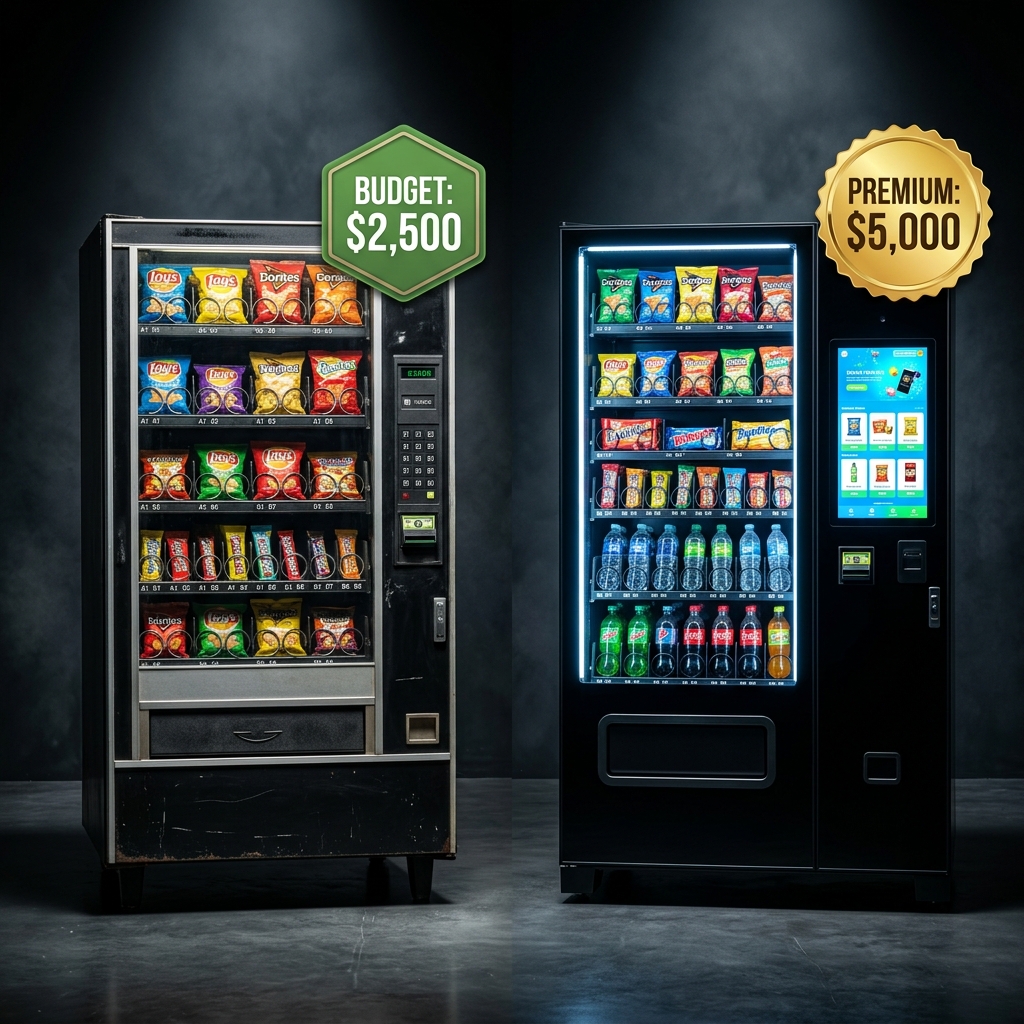
Budget vs Premium: a refurbished machine at $2,500 vs a brand-new touchscreen unit at $5,000, both profitable, different timelines.
New vs Refurbished: Sourcing Your Equipment
When purchasing vending machines, you will face a fundamental choice: should you buy a brand-new machine with the latest touchscreen technology, or a refurbished machine from a local distributor? This lesson compares both paths, outlines the hidden risks of used equipment, provides negotiation tips, audits technician service dynamics, and presents a detailed 5-year cost of ownership analysis.
1. Refurbished Machines: The Pragmatic Choice
A refurbished machine is a used unit that has been cleaned, tested, repainted, and repaired by a certified technician. Most reputable vending distributors offer refurbished machines with a 30 to 90-day parts warranty.
- Pros:
- Fast ROI: Sourcing a quality refurbished combo machine for $2,800 instead of $6,000 cuts your payback period in half.
- Depreciation Buffer: Brand-new machines depreciate by 20-30% the moment they leave the showroom floor. Refurbished units hold their value well; you can often resell a used AMS combo machine for the same price you bought it for a year prior.
- Simplicity: Older, reliable boards are easier to troubleshoot and repair yourself using cheap, widely available online parts.
- Cons:
- Cosmetic Wear: Minor dings, scratches, or outdated styling.
- No Long-term Warranty: You bear the financial risk of major component failures (like the compressor or logic board) after the initial 90 days.
- Retrofitting Required: You may need to manually install MDB upgrade kits or cashless card readers.
2. New Machines: The Premium Route
Buying new means purchasing equipment straight from the manufacturer (such as AMS, Crane, or Seaga) or an authorized national distributor.
- Pros:
- Peace of Mind: Full 1 to 2-year manufacturer warranty covering all major components.
- Demographic Appeal: Sleek, modern styling with bright LED lights, touchscreens, and shopping cart interfaces. Essential for securing competitive Tier S corporate offices or luxury high-rise properties.
- Energy Efficiency: Modern Energy Star certified compressors use up to 40% less electricity, which is a major selling point when pitching eco-conscious location managers.
- Cons:
- High Capital Barrier: Requires $5,000 to $8,000 upfront per machine.
- Longer Payback Period: An expensive machine in a mediocre location can take 3+ years to pay for itself.
3. Detailed Model Comparison
When sourcing equipment, aim for these industry-proven models:
| Model | Type | Est. Used Price | Est. New Price | Key Strengths |
|---|---|---|---|---|
| AMS 39 Combo | Snack/Drink Combo | $2,800 - $3,400 | $5,800 - $6,500 | "Sensit" drop sensors, heavy-duty build, parts available everywhere. |
| Royal Vendors 660 | Beverage Only | $1,800 - $2,400 | $3,800 - $4,500 | Bulletproof reliability, holds 660 cans/bottles, outstanding refrigeration. |
| Crane National 167 | Snack Only | $2,000 - $2,600 | $4,200 - $4,800 | Large capacity, reliable control board, highly customizable coils. |
4. Red Flags: Used Machines to Avoid at All Costs
If you choose the used/refurbished path, beware of these three industry trap doors:
- Non-MDB (Single-Price or Micromech) Systems: Vending machines built before the mid-1990s use old communication protocols. They cannot communicate with modern credit card readers or telemetry systems without expensive control board replacement kits ($350 - $500). If you see a machine with a 15-pin connector on the coin mech instead of the standard 6-pin MDB connector, pass on it.
- R12 Refrigeration Systems: Older compressors use R12 Freon, which is phased out due to environmental regulations. If the compressor fails or leaks, it cannot legally be refilled with R12. Converting an R12 system to modern R134a refrigerant requires replacing the entire compressor, drier, and expansion valve, which is rarely financially viable.
- Obscure or Out-of-Business Brands: Stick to major manufacturers (AMS, Crane National, Royal Vendors, Dixie Narco, Vendo, Automatic Products). Avoid obscure imported brands or machines from companies that have gone out of business (like older Polyvend or USI models with proprietary parts). Sourcing a replacement motor or keypad for an orphan machine is incredibly difficult and will result in weeks of machine downtime.
5. Technician Service & Warranty Nuances
Understanding technician dynamics is critical for long-term route maintenance:
- Certified Vending Technicians: Vending technicians charge $100 to $150 per hour for service calls, plus travel fees. You should learn to perform basic diagnostics yourself.
- Where to Find Technicians: The National Automatic Merchandising Association (NAMA) maintains a directory of certified service centers. Alternatively, local distributors often have in-house technicians available for contract repairs.
- Warranty Limitations: Standard refurbished warranties from distributors only cover parts, not labor. If a control board fails within 90 days, the distributor will ship you a replacement board, but you must install it yourself or pay a technician to do so.
6. Sourcing Inspection & Refurbished Test Protocol
When auditing a refurbished unit at a distributor warehouse, do not rely on their word. Request a physical demonstration:
- Refrigerant Leak Test: Open the refrigeration bay. Search the copper lines and connections for an oily residue. A slow refrigerant leak always carries lubricating oil with it; oily spots indicate a leak that will cause the compressor to fail in months.
- Control Board Diagnostics: Access the test menu on the motherboard. Run a "Motor Test" to cycle every single selection slot. If a spiral fails to turn, verify if it is a failed motor ($35) or a broken wire connection.
- Keypad Tactility Audit: Press every key firmly. If buttons stick or feel spongy, the key membrane is worn and will cause customer selection failures.
7. Negotiation Tips for Sourcing Used Equipment
When buying from independent sellers or local operators, use these negotiation levers to lower the purchase price:
- Test Before You Pay: Always bring cash but refuse to hand it over until you run the physical checks. If the seller refuses to plug the machine in so you can test the compressor, walk away immediately.
- Audit Missing Keys/Locks: If the machine is locked and the seller has no keys, deduct $100 from your offer to cover the cost of drilling out the lock cylinder and replacing the T-handle plug.
- Bundle Purchases: If an operator is retiring or closing a route, offer to buy 2 or 3 machines at once. You can typically secure a 15% to 25% discount on the total price by purchasing in bulk.
- Leverage Cosmetic Imperfections: Dents, faded side decals, or minor rust spots do not affect the machine's mechanics, but they represent excellent negotiation points. Use them to chip away $150-$300 from the asking price.
8. 5-Year Total Cost of Ownership (TCO) Analysis
To understand the long-term financial differences, review this projection comparing a Refurbished AMS Combo ($2,800) vs. a New Seaga Combo ($5,500):
| Cost Component (5 Years) | Refurbished AMS | New Seaga |
|---|---|---|
| Initial Purchase Price | $2,800 | $5,500 |
| Cashless Reader & Installation | $350 | Included |
| Delivery & Logistics Setup | $300 | $300 |
| Maintenance & Repairs (Est.) | $600 (Out-of-warranty parts) | $150 (Covered by warranty) |
| Energy Costs ($0.15/kWh) | $2,400 ($40/month) | $1,500 ($25/month) |
| Total 5-Year Cost | $6,450 | $7,450 |
| Est. Payback (at $200/mo net) | 15.7 months | 29.2 months |
The Takeaway: Although the new machine saves $900 in energy costs and is cheaper to maintain, the refurbished machine still wins on total cost of ownership by $1,000 over five years. For your first three placements, buy refurbished to conserve your capital and prove the profitability of your locations.