Essential Features & Technology
⏱ 7 min read
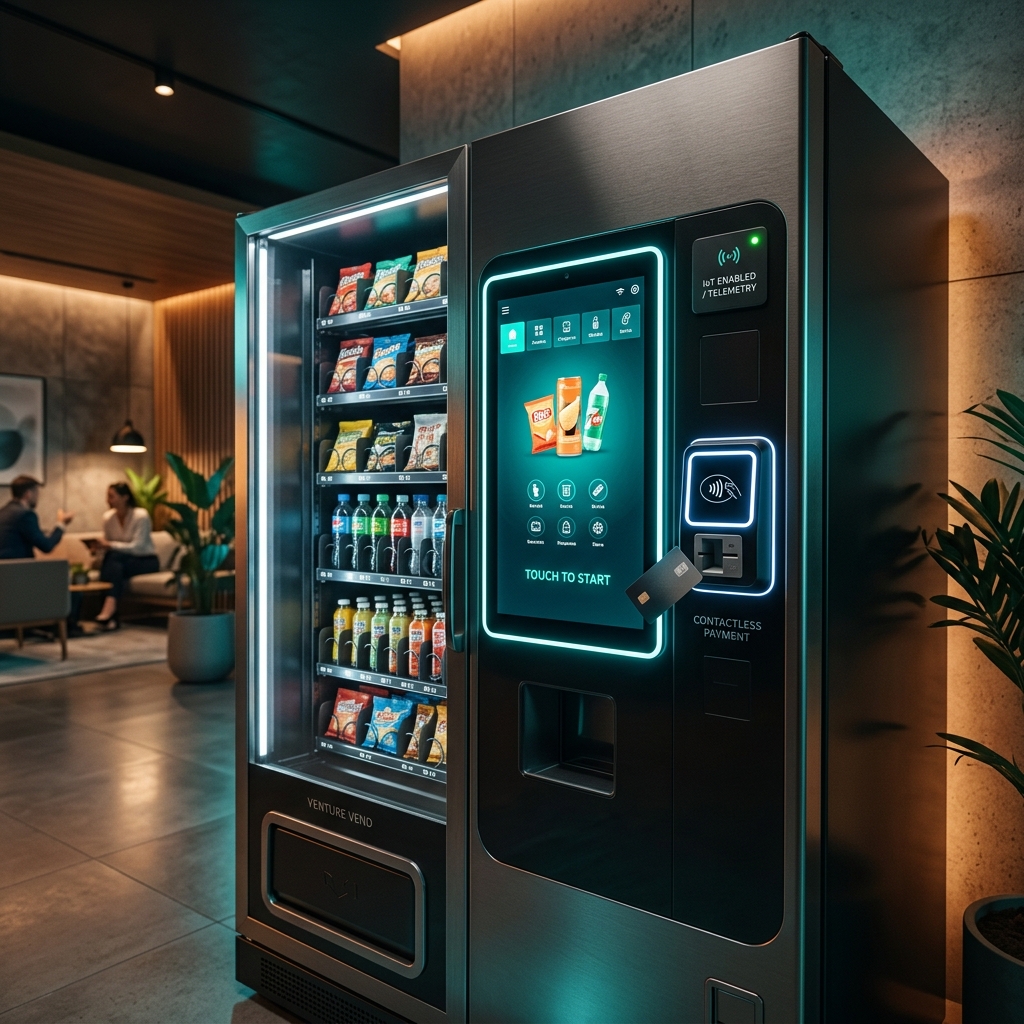
Modern vending technology: touchscreen displays, NFC cashless readers, IoT telemetry, and LED-lit interiors. These features separate profitable machines from outdated ones.
The Vending Tech Stack: MDB, DEX, and Telemetry
Modern vending is a software-enabled business. The operators who achieve six-figure incomes are not working harder; they are using technology to optimize their routes, increase their margins, and eliminate machine downtime. This lesson covers the core technologies you must understand to run an efficient, modern route.
1. The MDB and DEX Protocols: The Foundation
Vending machines rely on two internal communication systems to track sales and accept payments:
MDB (Multi-Drop Bus)
MDB is the internal hardware protocol that connects the machine's central computer (the controller board) with its peripherals, including the bill validator, coin mechanism, and cashless card reader. MDB allows you to plug in a card reader from any brand (like Nayax or Cantaloupe) and have it automatically coordinate with the machine's selection keypad. Always ensure your machines support MDB Version 2.0 or higher.
DEX (Data Exchange)
DEX is a data protocol that records audits of every transaction, inventory level, and machine error. When a cashless reader is connected to the machine's DEX port, it extracts this data and transmits it over cellular networks to your telemetry software. This is what allows you to see exactly how many cans of Diet Coke are left in slot 12 without opening the machine door.
2. Telemetry and Remote Monitoring: ROI Breakdown
Telemetry units use a cellular modem to transmit DEX data from your machine to a cloud dashboard. Rather than driving to your locations on a fixed weekly schedule, telemetry lets you manage your route by demand.
The Real-World ROI of Telemetry
Assume you run a 10-machine route without telemetry. You must visit every machine weekly to check stock and collect cash.
- Without Telemetry:
- 10 visits/week x 30 minutes/visit = 5 hours of route time.
- Fuel costs: ~$80/week.
- Wasted trips: 4 out of 10 machines did not actually need service.
- With Telemetry:
- Your dashboard tells you only 6 machines are low on stock.
- 6 visits/week x 30 minutes/visit = 3 hours of route time.
- Fuel costs: ~$48/week.
- Savings: 2 hours of labor + $32 in fuel weekly.
- Monthly Savings: $288 (assuming your labor is valued at $25/hour).
- Telemetry Cost: $20/month per machine ($200 total).
- Net Monthly Profit Increase: +$88 plus 8 hours of reclaimed personal time.
3. Vending Management Systems (VMS) & Pre-Kitting
Once you scale past 3 machines, telemetry data flows directly into a VMS (Vending Management System) like Parlevel VMS or Cantaloupe Seed:
- Pre-Kitting in the Warehouse: Without a VMS, you must load bins of random sodas and snacks into your route van, drive to the location, open the machine, count the empty slots, walk back to the van, pack the snacks, and walk back. With a VMS, the system generates a pick list at the warehouse. You pack exactly 14 Snickers, 8 bags of Baked Lays, and 24 cans of Diet Coke into a single tote, carry it to the machine, and load it in a single trip. This cuts route service time by 50%.
- Cash Discrepancy Audits: The VMS matches the physical cash you collect and deposit in the bank with the machine's recorded bills and coins. If a machine's cash box has a discrepancy of more than $5, the system highlights it, allowing you to catch theft or card reader firmware issues immediately.
4. Cashless Readers: Sourcing and Processing Fees
Cashless readers are non-negotiable in modern vending. When choosing a cashless provider, you must compare hardware costs and processing fee models:
| Provider | Hardware Cost | Monthly Fee | Transaction Fee | Key Features |
|---|---|---|---|---|
| Nayax VPOS Touch | $320 - $380 | $7.95 - $9.95 | 5.95% (Flat) | Supports Apple Pay, Google Pay, Monyx app, and offline transactions. |
| Cantaloupe ePort G11 | $300 - $350 | $9.95 | 5.50% + $0.05 | High-speed connection, integrated telemetry, excellent analytics. |
| PayRange | $40 - $80 | $0 | 5.25% | Bluetooth-only (uses customer's phone cellular data). Lowest hardware cost, but requires users to download an app. |
Our Recommendation: Use the Nayax VPOS Touch or Cantaloupe ePort for public, high-traffic locations. Use PayRange as a low-cost addition for closed employee breakrooms where workers are happy to download an app for convenience.
5. Technology Upgrade Priority List
If you have limited startup capital, you must prioritize your technology upgrades to maximize your return on investment:
- Cashless Card Reader (Priority: 10/10): Increases sales by 20% to 35% by capturing card and mobile buyers who do not carry cash. Never place a machine without one.
- LED Lighting Retrofits (Priority: 8/10): Costs only $40-$80 for a plug-and-play strip kit. Reduces energy costs by $80/year while driving a significant increase in impulse purchases due to enhanced product visibility.
- Drop Sensors (Priority: 7/10): Essential if stocking fragile or high-margin products. Reduces service calls for jammed items by 95% and builds trust with location employees.
- Touchscreen Displays (Priority: 3/10): A nice-to-have visual upgrade. Only invest in touchscreens for premium Tier S placements (high-tech corporate hubs) where aesthetics help you win or retain the location.
6. Drop Sensor Technology: SureVend and Golden Eye
Older machines often suffer from jams, where a product gets stuck on the coil and fails to drop. In old machines, this resulted in lost revenue, angry location managers, and vandalized machine doors.
Modern machines solve this with infrared drop sensors mounted at the bottom of the delivery bin.
- If a customer selects an item, the coil rotates.
- If the infrared beam is not broken by a falling product, the machine knows the item is jammed.
- The machine will automatically rotate the coil an additional 360 degrees to force the drop.
- If it still fails, the display shows "Please Select Another Item" and refunds the credit.
ROI Impact: Installing or buying machines with drop sensors reduces refund request phone calls by 95% and preserves customer trust.
7. LED Lighting Conversion
Converting a machine from old T8 fluorescent tubes to modern LED strips is one of the easiest, highest-return upgrades you can perform.
- The Visual Impact: Bright, clean LED lighting makes products look fresh and appealing. Studies show that replacing dim fluorescent lighting with high-lux LED strips increases impulse sales significantly.
- Energy and Cost Savings:
- Fluorescent tube power draw: 80 Watts.
- LED strip power draw: 18 Watts.
- Annual energy savings per machine: ~$80.
- Retrofit kit cost: $45 (simple plug-and-play installation).
- Payback period on LED upgrade: 6.7 months (solely on energy savings, ignoring increased sales).
8. ADA Compliance Guidelines
When buying or retrofitting machines, you must ensure compliance with the Americans with Disabilities Act (ADA), especially for public locations, government offices, and schools:
- Operable Parts Height: Under 2010 ADA standards, all operable controls (keypad, coin drop, bill entry path, cashless reader) and the delivery bin must be positioned between 15 inches minimum and 48 inches maximum above the finished floor.
- Reach Approach: The machine must be positioned to allow clear floor space for a parallel or forward approach by a wheelchair user.
- Activation Force: The force required to operate keys, buttons, or push-doors on the delivery bin must not exceed 5 pounds.
- Compliance Check: Before placing a refurbished or older machine in a public lobby, verify the control height. Newer combo machines are designed with high delivery bins and low keypads specifically to meet ADA reach requirements.