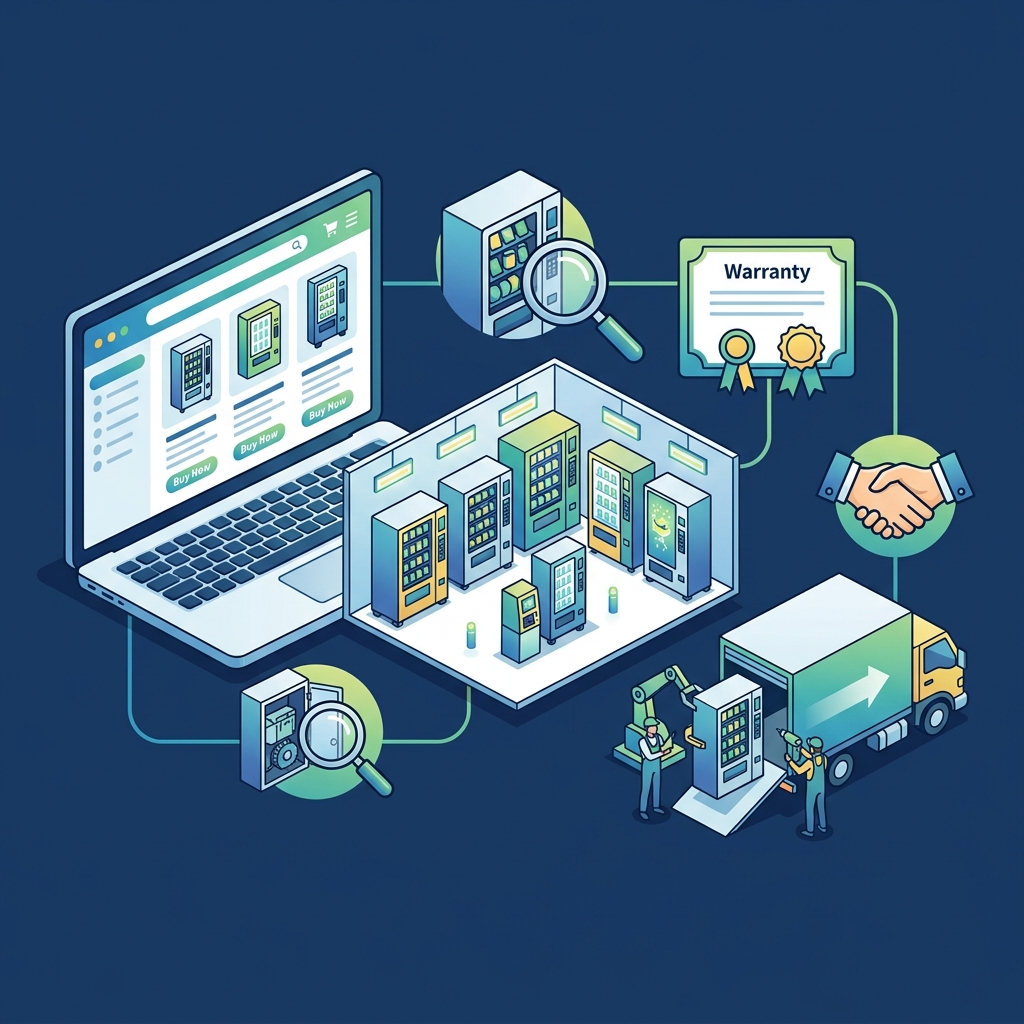
Your purchasing ecosystem: online marketplaces, showroom distributors, quality inspections, warranty coverage, and reliable delivery.
Sourcing Your Equipment: The Vetting Blueprint
To build a professional vending operation, you need a network of reliable suppliers. Buying the wrong equipment or buying from a dishonest seller is the fastest way to lose capital. This lesson details the exact online marketplaces, local distributor options, shipping logistics, rigging details, and negotiation blueprints you must use when sourcing machines.
1. Online Marketplaces & Vetting Strategies
Sourcing equipment online requires patience and careful verification. Here is how the major platforms compare:
Facebook Marketplace & Craigslist
- Pros: The absolute cheapest source for equipment. You are dealing directly with local businesses or retiring route operators who want to unload equipment quickly. Cash deals rule here.
- Cons: High risk. No warranties, no refund policies, and a high probability of mechanical issues that are hidden during a brief inspection.
- Search Optimization: When searching local sites, use highly specific search queries: "AMS Sensit combo", "Royal Vendors beverage machine", "Crane National vending" or "Cantaloupe card reader". Avoid generic terms like "vending machine" which return low-margin toy/candy dispensers.
- Vetting Rule: Always inspect the machine in person while it is powered on. Ask: "Why are you selling this specific unit?" Verify the cooling system cycles down to 36°F before handing over cash.
eBay
- Pros: Large selection, buyer protection policies for transactions, and access to national shipping logistics.
- Cons: High shipping costs ($300 - $600 per machine). You cannot physically inspect the refrigeration compressor or logic board before buying.
- Vetting Rule: Only buy from sellers with a 98%+ feedback rating and a documented history of selling commercial vending or restaurant equipment.
GovDeals & Public Surplus
- Pros: Government liquidations (schools, military bases, post offices) often sell high-quality, government-maintained machines at auction for pennies on the dollar.
- Cons: Buyer is responsible for 100% of rigging and removal. If a machine is on the third floor of a school with no elevator, you must figure out how to move it.
- Vetting Rule: Only bid if you have a professional equipment moving team with an appliance liftgate ready.
Online Refurbishers (Vending.com, eVending)
- Pros: Certified diagnostics, fresh paint, brand new cashless readers pre-installed, and a 1-year parts warranty.
- Cons: Premium prices. A refurbished combo machine that costs $2,500 on Facebook Marketplace will cost $4,500+ from a national refurbisher.
- Vetting Rule: Ask for the diagnostic checklist and verify if the freight shipping is insured to your driveway.
2. Sourcing Trust Vetting & Vending-Specific Auctions
When dealing with third-party private sellers, look for these trust signals:
- Questions to Ask Private Sellers:
- "Do you have the keys and codes to the programming service menu?" If the seller lacks keys, you must drill the lock ($20-$50). If they don't know the motherboard code, resetting the machine requires a full control board swap.
- "Is this machine currently active on a route?" Active machines are far less likely to have dried seals or seized compressor bearings.
- "Can you provide the last DEX export history log?" This file proves the machine's software is communicating and shows exact sales volumes.
- Vending Auctions: Platforms like LocalAuctions.com and school district liquidation sales are goldmines. Always budget an extra $200 for moving overhead when bidding on municipal sites.
3. Shipping & Delivery Logistics: What to Expect
Moving a 600 to 800-pound steel box requires specialized freight coordination. Never attempt to transport a vending machine in the back of a standard pickup truck without proper strapping and a liftgate.
- Curbside Freight Delivery: Sourcing from an online distributor usually includes curbside delivery. The freight carrier drops the machine on a pallet at your driveway. You are responsible for uncrating it, moving it inside, and positioning it.
- White Glove Delivery: Highly recommended. For an extra $200 - $350, professional movers will unload the machine, navigate doorways and elevators, position it in the breakroom, and level it.
- The Transit Risk: Secure "Inland Marine" insurance or transit insurance. Standard freight carriers only cover minimal damage limits per pound ($0.50 - $2.00/lb) unless you purchase additional full-value coverage.
4. Equipment Moving & Rigging Mechanics
If you choose to transport a machine yourself to save on delivery fees, you must understand the rigging mechanics:
- Appliance Dollies: Use a heavy-duty steel appliance dolly rated for 800 to 1,200 pounds, equipped with an integrated ratchet strap system and stair-climbing tracks.
- Stair Crawlers: If navigating stairs, rent a motorized stair crawler (such as an Escalera Stair Cat) from a local tool rental shop ($75/day). This device uses battery-powered tracks to lift the machine step-by-step, eliminating physical lifting strain and preventing tipping accidents.
- Rigging Fees: If hiring local commercial riggers to move a machine from your garage to a location, expect to pay a flat fee of $250 to $500 depending on distance and accessibility.
5. Bulk & Lot Sourcing Strategies
Once you scale past 3 locations, buying machines one-by-one becomes inefficient. Transition to bulk sourcing:
- Retiring Route Operators: The best source for lot purchases. They often sell 5 to 20 machines, along with the location contracts, for a bundle price.
- Vending Distributors: Ask distributors about "scratch and dent" inventory or bulk discounts. Buying 3+ machines at once can secure a 10% to 15% discount on hardware costs and save you up to 50% on combined freight shipping.
6. "What NOT to Buy": The Vending Blacklist
To avoid purchasing a permanent headache, never buy the following equipment:
- Machines Missing a Coin Mech or Bill Validator: Sellers often say: "It just needs a cheap $20 part." If it were that cheap, they would have fixed it themselves. A missing validator and coin mech will cost you $300 - $500 to replace and calibrate.
- Candy-Only Countertop Machines: Small 9-column candy dispensers that sit on office counters. They have tiny capacities, high theft rates, and rarely generate more than $30/month in revenue.
- Unbranded Imports: Cheap, imported touchscreen machines sold on Alibaba. Sourcing replacement motors, keypads, or cooling parts for these units is virtually impossible, rendering the machine scrap metal if a minor component breaks.
- Machines Using R12 Compressors: Old cooling systems that cannot be legally refilled with phased-out R12 refrigerant, requiring an expensive $1,000 system conversion if they leak.