Business Registration & Legal Setup
⏱ 6 min read
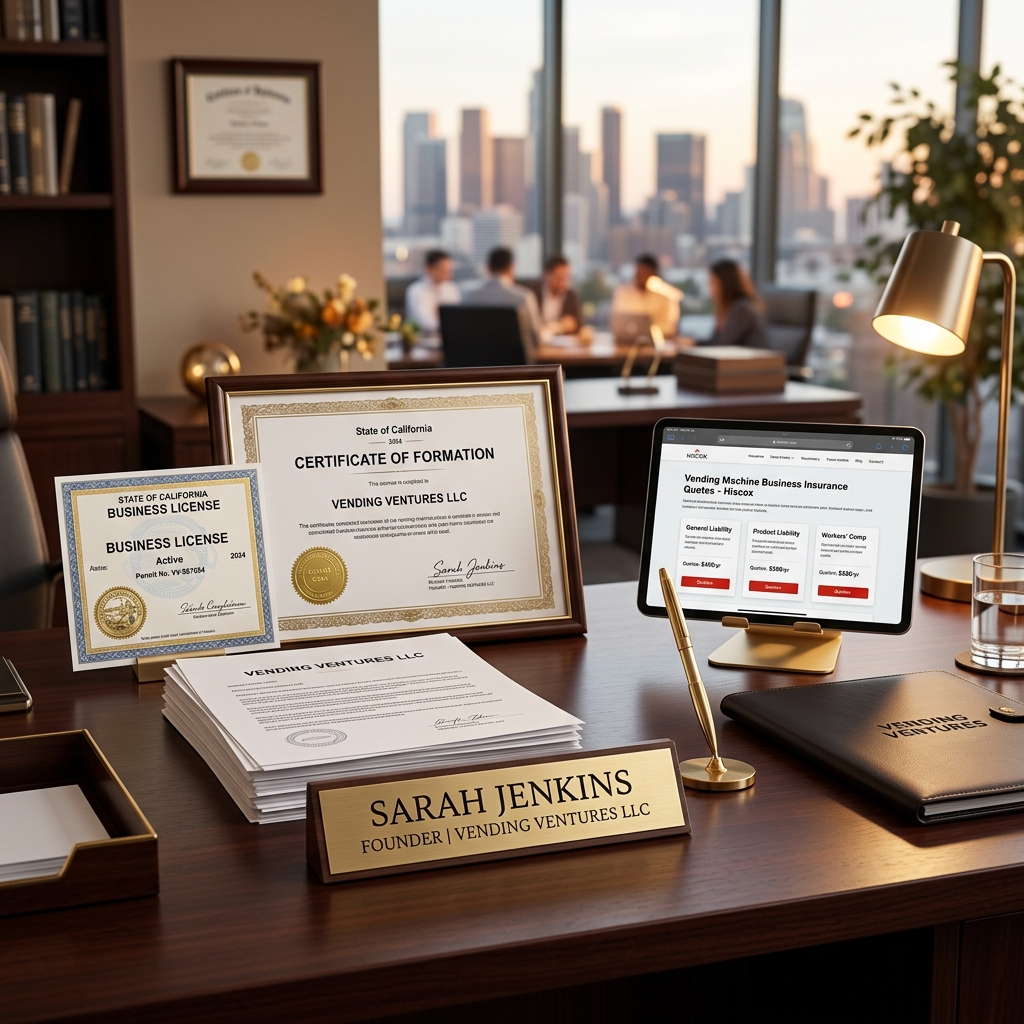
Foundation first: LLC formation, business licensing, insurance coverage, and tax registration. This is the legal framework that protects your vending business.
Setting Up Your Business: The Legal & Financial Foundation
Skipping the legal setup is one of the most common and most expensive mistakes new operators make. A slip-and-fall at your machine, a product liability claim, or an IRS audit can wipe out years of profit if you're operating as a sole proprietorship. This lesson details the legal structure, state-by-state tax configurations, insurance metrics, and bookkeeping practices needed for your vending business.
1. Form an LLC ($50-500)
A Limited Liability Company (LLC) separates your personal assets from your business liabilities. If a customer sues your business due to an injury or food-borne illness, your home, vehicle, and personal bank accounts remain protected.
- Filing: File "Articles of Organization" with your Secretary of State and pay the state filing fee.
- EIN Setup: Once filed, apply for an Employer Identification Number (EIN) on the IRS website. This is a free, 5-minute process. Use your EIN instead of your Social Security Number to open business bank accounts and apply for credit.
- Operating Agreement: Even if you are a single-member LLC, draft a simple Operating Agreement. This document defines your company's structure and reinforces your limited liability status in court.
2. General Liability Insurance & COI Requirements
Before placing a machine, almost every commercial location manager will require a Certificate of Insurance (COI):
- Coverage Thresholds: A standard vending contract requires $1,000,000 per occurrence / $2,000,000 aggregate in Commercial General Liability (CGL) coverage.
- Cost: A basic CGL policy for a start-up vending business costs between $400 and $700 per year. Providers like NEXT Insurance or Hiscox offer fast online quotes and instant COI generation.
- Additional Insured: When signing a contract, you will need to add the property owner or corporation as an "Additional Insured" on your policy, which is typically free and takes 5 minutes inside your insurance portal.
3. State-by-State Regulatory Mapping
Different states have widely varying rules for sales tax and vending licenses. Here is a guide for the top business states:
California
- Sales Tax: Vending sales of cold beverages and hot prepared foods are fully taxable. Carbonated water and sodas are taxed at the local rate.
- Licenses: Requires a Seller's Permit from the CDTFA and a local business license. Perishable food machines require a health department permit.
Texas
- Sales Tax: Candy, sodas, and soft drinks are subject to sales tax. Snacks (like potato chips and pretzels) sold in vending machines are exempt if the machine price is under $1.50, but taxable if over.
- Licenses: Requires a Texas Sales Tax Permit and a Vending Machine License from the Texas Comptroller.
Florida
- Sales Tax: Florida applies a special vending sales tax rate. You must pay 6.55% tax on food and beverage vending sales (the state rate of 6% plus a local option surcharge).
- Licenses: Requires registration with the Florida Department of Revenue and a local business license.
New York
- Sales Tax: Sodas, candy, and heated foods are taxable. Milk, fruit juice, and plain water are exempt.
- Licenses: Requires a Certificate of Authority from the NY Dept of Taxation and Finance to collect sales tax.
Illinois
- Sales Tax: Illinois imposes sales tax on vending items. Food products are taxed at a lower rate (1%), while sodas and candy are taxed at the high general merchandise rate (6.25% + local surcharges).
- Licenses: Requires registration with the Illinois Department of Revenue.
Georgia
- Sales Tax: Vending sales are subject to standard state and local sales taxes.
- Licenses: Requires a local occupational tax certificate (business license) and an annual vending machine license fee of $15 to $50 depending on the municipality.
North Carolina
- Sales Tax: A unique exception exists: food and beverage items sold through vending machines are taxed at 50% of the normal state sales tax rate.
- Licenses: Requires a sales tax registration permit.
Michigan
- Sales Tax: Cold food and non-carbonated waters are generally exempt from sales tax. Sodas and carbonated beverages are fully taxable.
- Licenses: Requires a state sales tax license and local health permits for food machines.
4. Bookkeeping & Financial Records Best Practices
To run a profitable route, you must maintain clean books. Avoid commingling personal and business funds.
- Dedicated Checking Account: Route all vending revenues and credit card deposits into a dedicated business checking account. Pay for all inventory, fuel, and parts using a business debit or credit card.
- Accounting Software: Link your business bank account to QuickBooks Online, Wave, or Xero. These platforms automatically import your bank transactions, categorizing your expenses.
- Key Expense Categories to Track:
- Cost of Goods Sold (COGS): Sourced snacks and beverages.
- Merchant Fees: 5-6% transaction fees from cashless processors.
- Route Fuel & Maintenance: Fuel receipts, oil changes, tire rotations.
- Location Commissions: Monthly or quarterly payouts to location owners.
- Equipment Depreciation: Write off the cost of your machines using Section 179 tax deductions.
5. Tax Strategy & Section 179 Depreciation
One of the greatest financial benefits of owning a vending business is the ability to write off capital equipment:
- Section 179 Deduction: This IRS tax code allows businesses to deduct the full purchase price of qualifying equipment (including new and refurbished vending machines) in the year they are placed in service, rather than depreciating the cost over 5 to 7 years.
- Example: If you buy 3 refurbished combo machines for $9,000, you can deduct the entire $9,000 from your business's taxable income in Year 1, saving you thousands on your tax bill.
6. When to Hire an Accountant vs. DIY
- Do It Yourself (DIY): If you operate 1 to 5 machines, you can manage your bookkeeping using a simple spreadsheet or Wave Accounting. You can file your own quarterly sales tax returns on your state's tax portal.
- Hire a Professional CPA: Once you scale past 5 machines or hire your first employee, hire a Certified Public Accountant (CPA). A CPA will ensure you take full advantage of equipment depreciation write-offs, handle corporate tax filings, and navigate complex local tax audits, saving you thousands in penalties.