Product Selection Strategy
⏱ 7 min read
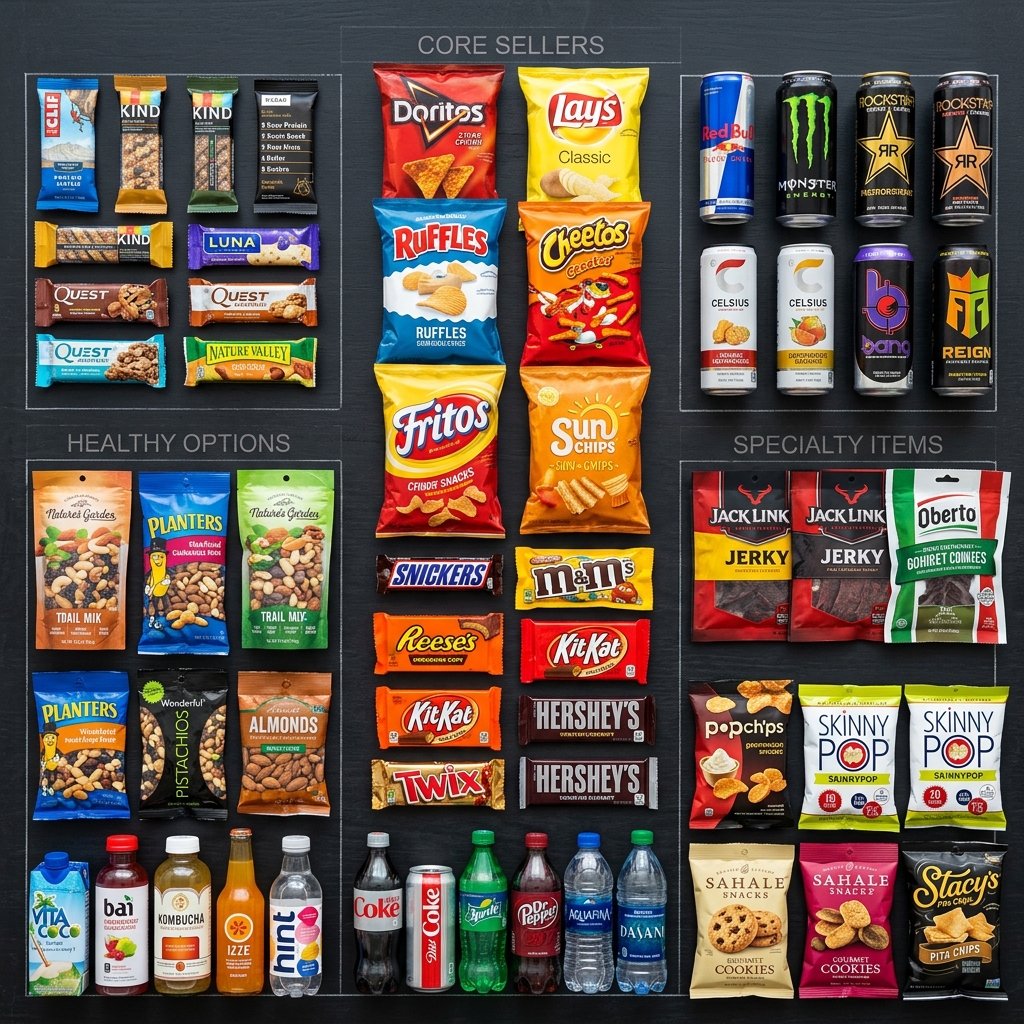
The 70/20/10 product mix: core sellers (chips, candy, soda), healthy options (protein bars, trail mix), and specialty test items (jerky, premium snacks).
Product Selection & Pricing: The Margin Blueprint
Product selection and retail pricing are the direct levers of your vending route's profitability. If you stock items with poor gross margins or low velocity, you will find yourself working twice as hard for half the income. In contrast, structuring your machine layouts using empirical sales data and optimized margins allows you to extract maximum cash flow from every single footprint.
This lesson details the mathematical structure of product selection (the "70/20/10 Rule"), outlines wholesale-to-retail pricing formulas, compares category margins, analyzes location-specific demographics, and establishes inventory sourcing and spoilage mitigation protocols.
The 70/20/10 Product Sourcing Strategy
To optimize inventory turnover and prevent dead capital (inventory sitting on shelves for weeks), organize your machine's product slots using a strict ratio:
┌────────────────────────────────────────────────────────┐
│               70% - High-Velocity Core                 │
│               (Coca-Cola, Doritos, Snickers)           │
├────────────────────────────┬───────────────────────────┤
│    20% - Loc Demographics  │  10% - Test               │
│    (Celsius, Quest, Jerky) │  (Takis, Prime, Prebiotic)│
└────────────────────────────┴───────────────────────────┘
1. 70%: High-Velocity Core Sellers
These are household brand-name snacks and beverages that sell across every demographic. They have slightly lower margins due to retail price-sensitivity but rotate rapidly, generating the consistent volume needed to cover your fixed route overhead.
- Beverages: Coca-Cola Classic, Diet Coke, Pepsi, Sprite, Gatorade (Fruit Punch / Cool Blue), Monster Energy (Green / Ultra White), Poland Spring or Pure Life Water (16.9oz).
- Snacks: Lay's Classic, Doritos (Nacho Cheese / Cool Ranch), Cheetos (Flamin' Hot / Crunchy), Snickers, M&M's Peanut, Reese's Peanut Butter Cups, Oreos, Pop-Tarts (Strawberry).
2. 20%: Location-Specific Demographics
Tailor these items specifically to the workers, clients, or residents at each location.
- Gyms & Fitness Centers: Muscle Milk, Celsius energy drinks, Gatorade Fit, Clif Bars, Quest protein bars, bottled coconut water.
- Corporate Offices: Kind Bars, SkinnyPop popcorn, baked potato chips, sparkling waters (LaCroix, Bubly), canned cold-brew coffees, prebiotic sodas (Olipop).
- Industrial Warehouses: Beef jerky bags (Jack Link's), sunflower seeds, large 20oz sodas, pastry honey buns, packaged cookies, cup noodles.
3. 10%: Rotational Test Slots
Use 2 to 3 slots in your machine to test new, high-margin, or trending products. This keeps regulars interested and allows you to discover hidden high-velocity items. Use a strict 30-day window to evaluate test items; if they meet velocity targets, promote them to the permanent 20% demographic category; if not, rotate in a new test item.
Wholesale vs. Retail Vending Price & Margin Mapping
To maintain a healthy business, target an overall gross margin of 55% to 65% across all products in a machine. Some items (like bottled water) will carry 80%+ margins, compensating for lower-margin items (like premium energy drinks).
| Product Category | Avg. Wholesale Cost | Suggested Retail Price | Gross Margin % | Target Demographic | Velocity Level |
|---|---|---|---|---|---|
| Standard Soda Can (12oz) | $0.42 | $1.25 | 66.4% | All locations | Very High |
| Premium Energy Drink (16oz) | $1.45 | $3.50 | 58.5% | Gyms, Warehouses | High |
| Bottled Water (16.9oz) | $0.22 | $1.50 | 85.3% | Gyms, Offices, Lobbies | High |
| Standard Potato Chips (1.5oz) | $0.48 | $1.50 | 68.0% | Offices, Warehouses | Very High |
| Chocolate Candy Bar (1.86oz) | $0.62 | $1.75 | 64.5% | Lobbies, Schools | High |
| Beef Jerky Bag (1.25oz) | $1.20 | $3.50 | 65.7% | Warehouses, Car Washes | Medium |
| Premium Protein Bar (2.1oz) | $1.35 | $3.75 | 64.0% | Gyms, Offices | Medium |
| Prebiotic Soda Can (12oz) | $1.10 | $3.00 | 63.3% | Tech Offices, Gyms | Medium-Low |
Deep Dive: Sourcing Channels Compared
Where you purchase your inventory determines your Cost of Goods Sold (COGS). As your route scales, your sourcing strategy must evolve to protect your time and margins.
1. Warehouse Clubs (Sam's Club & Costco)
Best for: Operators managing 1 to 10 machines.
- Pros: Zero shipping or delivery fees; you can inspect expiration dates in person; buy exactly the quantities you need without minimums; leverage sales tax-exemption certificates easily on-site. Sam's Club offers a Plus membership ($110/year) that opens up early shopping hours (8:00 AM) and cash-back rewards, which is essential to avoid general retail crowds and ensure you get your stock loaded and on the road early.
- Cons: High physical labor (loading heavy boxes into your cart, vehicle, and storage); inconsistent stock levels on popular items; requires driving time.
- Margin Profile: COGS typically averages 40% to 45% of retail price.
2. Broadline Wholesale Distributors (Vistar & McLane)
Best for: Operators managing 15+ machines.
- Pros: Direct delivery to your warehouse space or home garage; access to vending-specific packaging (individual wraps, standardized sizing); volume discounts. Vistar is the largest dedicated vending distributor in the US, offering access to thousands of SKUs that are not available in retail warehouse clubs (such as specific vending-size pastry packs or regional snack favorites).
- Cons: Strict minimum order quantities (often $1,000+ per delivery); potential fuel surcharges; delivery window coordination required. You must have a dedicated space to receive palletized deliveries, such as a commercial garage or warehouse bay with a loading dock or pallet jack.
- Margin Profile: COGS averages 35% to 40% of retail price due to volume discounts.
3. Direct Store Delivery (DSD)
Best for: High-volume placements (hospitals, schools, transit centers).
- Pros: Coca-Cola and Pepsi distributors deliver and stock their own branded machines directly at your location.
- Cons: Requires signed exclusivity contracts; pricing per case is often higher than Sam's Club unless you buy full pallets (36+ cases of a single flavor).
Inventory Management: Spoilage & FIFO Protocols
Perishable inventory will spoil if not managed properly. Spoilage eats directly into your net profit. Implement these three operational rules:
-
Strict FIFO (First In, First Out): During every restocking visit, pull the remaining items to the front of the coil and load the fresh inventory at the back. Never stack new items on top of old ones. If a bag of chips sits at the back of a coil for three months, it will expire, and when a customer finally buys it, they will receive a stale product, ruining customer goodwill.
-
Expiration Date Tracking: Maintain a digital log of expiration dates for pastries, cookies, and chocolate bars. Pastries typically have a short 30-day shelf life, while chips have 60-90 days, and sodas have 9-12 months. During winter, chocolate sales spike, but during summer, you must cut chocolate inventory by 50% and shift to non-melting sugar candies (gummies, licorice) to prevent inventory loss in non-air-conditioned settings.
-
The Spoilage Rate Metric: Track your monthly wastage.
Aim to keep your spoilage rate under 3%. If your spoilage exceeds 5%, you are over-stocking slow-velocity coils and must reduce those selection slots.
Pricing Strategy: Brand Velocity vs. Generic Margins
A common mistake made by new operators is stocking generic or private-label brands (such as store-brand water or generic chips) because they offer a higher gross margin percentage.
For example, generic bottled water costs $0.12 and sells for $1.50 (92% margin), while brand-name Poland Spring costs $0.22 and sells for $1.50 (85% margin).
However, brand-name water will sell at 3x the velocity of generic water.
Always focus on total net profit dollars generated, not just margin percentages. Brand-name recognition drives impulse sales.