Hiring & Team Building
⏱ 6 min read
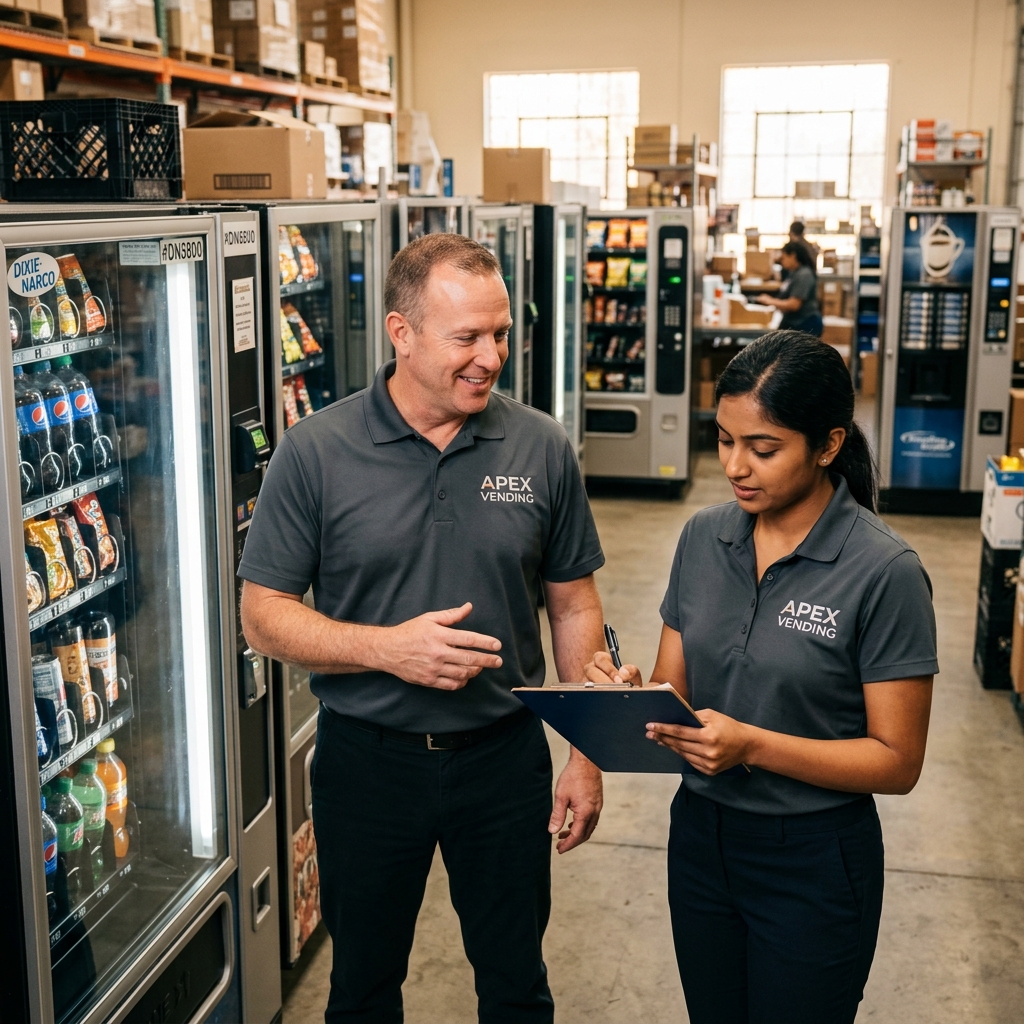
From solo operator to team leader: training your first route driver, building standard operating procedures, and delegating for growth.
Hiring & Team Building: Scaling Beyond Yourself
To scale your vending business past 20 machines, you must transition from a solo operator to a manager. The physical constraints of route operations, such as loading heavy soda cases, driving, stocking, cleaning, and resolving maintenance issues, limit what a single person can accomplish. Once you reach 20-25 machines, you will hit a growth ceiling. To continue growing, you must hire route drivers.
This lesson details the legal distinction between W-2 employees and 1099 contractors, outlines route driver compensation models, details recruitment screening processes, provides standard operating procedures, outlines driver retention strategies, and establishes a trust-but-verify auditing system to prevent inventory and cash shrinkage.
W-2 Employees vs. 1099 Contractors
Classifying your workers correctly is critical to avoid state labor fines and IRS audit penalties.
┌────────────────────────────────────────────────────────┐
│                   Legal Classification                 │
├───────────────────────────┬────────────────────────────┤
│   W-2 Route Driver        │   1099 Contractor          │
│   - Uses your vehicle/keys│   - One-off movers         │
│   - Follows your schedule │   - Specialist technicians │
│   - Uses your VMS app     │   - Project-based only     │
└───────────────────────────┴────────────────────────────┘
- W-2 Route Drivers (Required for Daily Operations): If you hire a driver to run your route, provide them with your vehicle, set their schedule, require them to wear a company uniform, and direct how they stock the machines, they are W-2 employees. You must pay payroll taxes, register for state unemployment tax, and purchase workers' compensation insurance.
- 1099 Independent Contractors (High Risk): Use only for project-based, specialized tasks. Examples include hiring a professional moving company for a machine delivery, or hiring an independent refrigeration technician for a compressor repair. If you pay a daily driver as a 1099 contractor, you face severe penalties for employee misclassification.
Driver Compensation Models Compared
To recruit reliable drivers while protecting your margins, choose the right pay structure:
1. Hourly Pay ($16 - $22 / Hour)
- Pros: Simple to calculate; predictable payroll expenses.
- Cons: Lacks incentives for efficiency. Drivers may work slowly to accumulate hours.
- Best For: Part-time warehouse helpers who load vehicles or clean machines on weekends.
2. Commission-Based Pay (3% - 6% of Gross Route Sales)
- Pros: Aligns incentives. Drivers earn more when machines perform well, motivating them to keep coils fully stocked, front-faced, and clean.
- Cons: Drivers may rush, skipping preventive maintenance tasks or driving aggressively.
- Best For: Experienced, independent route managers running mature clusters.
3. Base Salary + Commission (Recommended Model)
Provide a stable base salary (e.g., $35,000/year) plus a 2% to 3% commission on the gross sales generated by their route. This gives the driver financial security while rewarding route growth and efficiency.
Compensation Model Math Example
Consider a driver paid under the Base + Commission model. The driver has a weekly base salary of $700.00. The route under their management generates $5,000.00 in gross sales for the week. The driver's commission is set at 2.5% of gross sales.
- Base Salary: $700.00
- Commission: $5,000.00 x 0.025 = $125.00
- Total Gross Pay: $825.00 for the week. This compensation structure rewards speed, accuracy, and customer satisfaction without inflating basic operational overhead. By offering a baseline salary, you ensure the driver covers their basic household needs, while the commission motivates them to maximize machine stocking levels.
Driver Recruitment & Screening Protocols
When hiring your first route driver, implement a rigorous screening process to protect your capital and reputation:
- Clean Driving Record (MVR): Drivers will operate your heavy cargo vans. Run a Motor Vehicle Record check; reject applicants with major violations (DUIs, reckless driving, or multiple speeding tickets) to keep insurance premiums manageable.
- Background Checks: Run criminal background checks. Drivers carry keys to high-security client properties (offices, schools) and collect cash. Trustworthiness is non-negotiable.
- Physical Capabilities: The role requires lifting 30-40lb beverage cases repeatedly and pushing 600lb machines on stair dollies. Include a physical assessment in your interview.
Standard Operating Procedure (SOP) Route Driver Checklist
To ensure your drivers maintain operational excellence and do not skip critical steps, enforce this daily checklist:
- Vehicle Pre-Inspection: Verify van fluids, tire pressure, and ensure liftgate and straps are secure.
- Pick List Audit: Cross-reference the VMS pre-kitting report with the loaded plastic totes before leaving the warehouse.
- Machine Arrival Check: Clean the exterior front glass, wipe the coin entry plate, and clear any trash in the delivery flap.
- Stocking & Rotation: Pull older products forward (FIFO) and place fresh products in the back. Remove any item expiring within 14 days.
- Telemetry Sync: Record physical inventory fills in the VMS app to ensure dashboard inventory syncs with card transactions.
- Cash Extraction: Pull cash stacker and coin boxes, seal them in zippered security bags, and log the bag numbers.
- Client Review: Briefly check in with the site manager before leaving to ensure they are satisfied.
Driver Retention & Company Culture
High driver turnover is costly. It results in broken equipment, inventory discrepancies, and strained client relationships. Build a positive route culture:
- Clean Fleet Policy: Provide drivers with modern, air-conditioned cargo vans. Working in hot, cramped vehicles degrades performance and morale.
- Safety Bonuses: Offer a quarterly bonus of $200.00 for drivers who maintain clean driving files (no accidents, tickets, or vehicle damage) and keep warehouse space tidy.
- Efficiency Incentives: Pay a $1.00 bonus per machine serviced above the daily target if the spot check scores remain above 95% on cleanliness and FIFO compliance.
The "Trust-But-Verify" Auditing System
Vending is a cash-heavy business, making it susceptible to inventory and cash shrinkage. A single dishonest driver can pocket hundreds of dollars a week. Implement these auditing controls:
-
DEX Telemetry Reconciliation: Every modern bill validator and coin mech records transaction data. When your driver returns from their route, cross-reference the physical cash collected against the expected cash recorded by the VMS:
Investigate any variance exceeding $5.00 per machine. Consistent variances indicate a bill jam, coin mech failure, or theft.
-
Photo-Verified Stocking: Require drivers to use the VMS app to upload photos of the machine shelves before and after restocking. This ensures they are front-facing products and keeping the machine tidy.
-
Unannounced Spot Audits: Once a month, visit 2-3 machines on a driver's route one hour after they complete service. Verify that the machine is clean, that products are front-faced, and that no expired stock remains on the shelves.
-
Inventory Log Reconciliation: Track your warehouse stock levels. Total inventory pulled from the warehouse must match the inventory logged as stocked in the VMS app. Any missing cases indicate warehouse shrinkage.